Impact crushers play a critical role in operations where efficiently reducing material size is essential. From producing high-quality aggregates for construction projects to processing recycled concrete and asphalt, these machines offer a powerful and versatile solution for a wide range of crushing applications. Their ability to deliver consistent product shape and high reduction ratios makes them a go-to choice for contractors, quarry operators and recycling professionals alike.
What is an Impact Crusher?
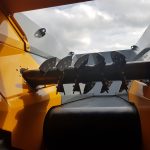
An impact crusher is a type of crushing machine that uses striking force rather than compression to break down material. Material enters a crushing chamber where rapidly spinning rotors equipped with blow bars strike the feed, shattering it against fixed breaker plates. This repeated collision reduces the material into smaller, more uniform pieces.
Unlike jaw or cone crushers, which rely on compression to crush material between surfaces, impact crushers are designed to produce a superior, cubical-shaped product with fewer flat or elongated particles. This makes them particularly effective for medium to soft stone, recycled materials and applications where consistent shape and gradation are important.
Because of their versatility and efficiency, impact crushers are widely used across multiple industries, including construction, demolition and recycling. Their ability to process a broad range of materials, from limestone to reclaimed asphalt, helps operators maximise productivity while maintaining product quality.
How Do Impact Crushers Work?
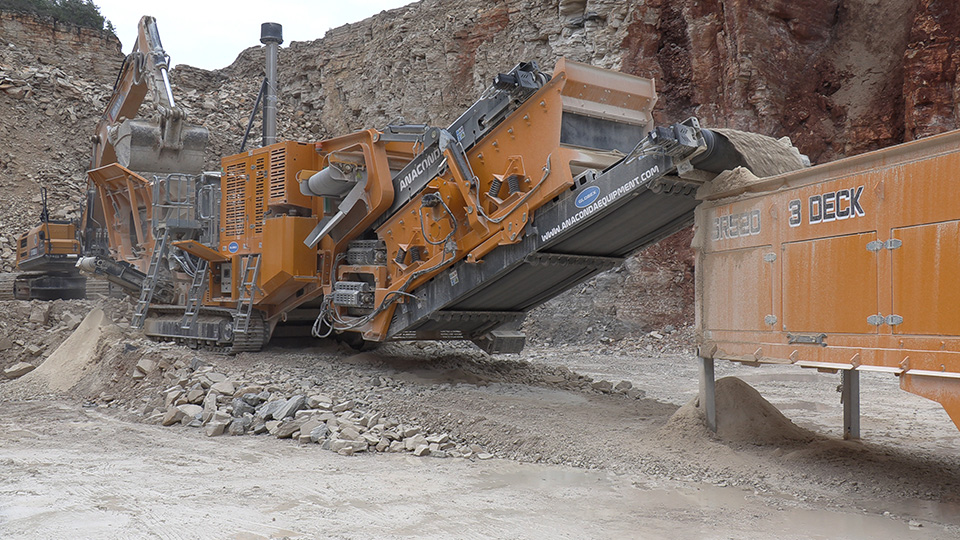
At the core of every impact crusher is the rotor. As material enters the crushing chamber, the rotor spins at high speed and propels the material into blow bars with tremendous force. These blow bars strike the material, breaking it into smaller pieces upon impact.
Once fractured, the material is thrown against impact aprons (also called breaker plates), where it undergoes additional reduction. A significant portion of the crushing process also comes from rock-on-rock impaction. During this process, material is accelerated by the rotor and collides with other particles in the chamber, creating further size reduction before exiting through the discharge opening.
There are two common types of impact crushers, each designed for specific applications:
- Horizontal Shaft Impactors (HSI):
These machines feature a horizontal rotor and are typically used in primary and secondary crushing stages. They are well suited for processing medium-hard and non-abrasive materials such as limestone, concrete and asphalt. HSIs are known for their high throughput and ability to handle larger feed sizes. - Vertical Shaft Impactors (VSI):
These machines use a vertical rotor and are typically used in tertiary or quaternary crushing stages. VSIs are ideal for producing fine, well-shaped materials and are widely used in sand and gravel production as well as manufactured sand applications.
When Should You Use an Impact Crusher?
Impact crushers are best suited for materials that are:
- Medium to soft in hardness (e.g., limestone, recycled concrete and asphalt)
- Non-abrasive or moderately abrasive
- Requiring a high reduction ratio and consistent product shape
They are commonly used in:
- Aggregate production for road building and base materials
- Asphalt and concrete recycling operations
- Secondary or tertiary crushing stages in quarrying
- Sand and gravel production
- Mineral processing applications where particle shape is critical
In these use cases, impact crushers excel because they produce a more uniform, cubical product compared to compression crushers. This often reduces the need for additional shaping or reprocessing, improving overall plant efficiency.
How Impact Crushers Improve Efficiency
Impact crushers do more than simply reduce material size, they enhance overall operational efficiency. By utilizing high-speed impact energy, they can achieve significant size reduction in a single pass, which leads to several key benefits:
- Fewer crushing stages: Reduced need for secondary or tertiary equipment
- Lower operating costs: Less equipment means lower fuel, maintenance and labour costs
- Improved product quality: Better particle shape and consistent gradation
- Reduced downstream processing: Less need for screening or reshaping
- Predictable output: Consistent results across varying feed materials
These advantages make impact crushers an excellent choice for operations focused on productivity, cost-efficiency and high-quality end products.
A Closer Look: Anaconda Impact Crushers
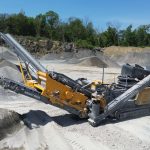
Anaconda Equipment offers a range of impact crushers designed for performance, mobility and ease of maintenance. Built with operators in mind, these machines combine robust crushing capability with user-friendly features and efficient transportability.
Anaconda I12 and I12R Impact Crushers
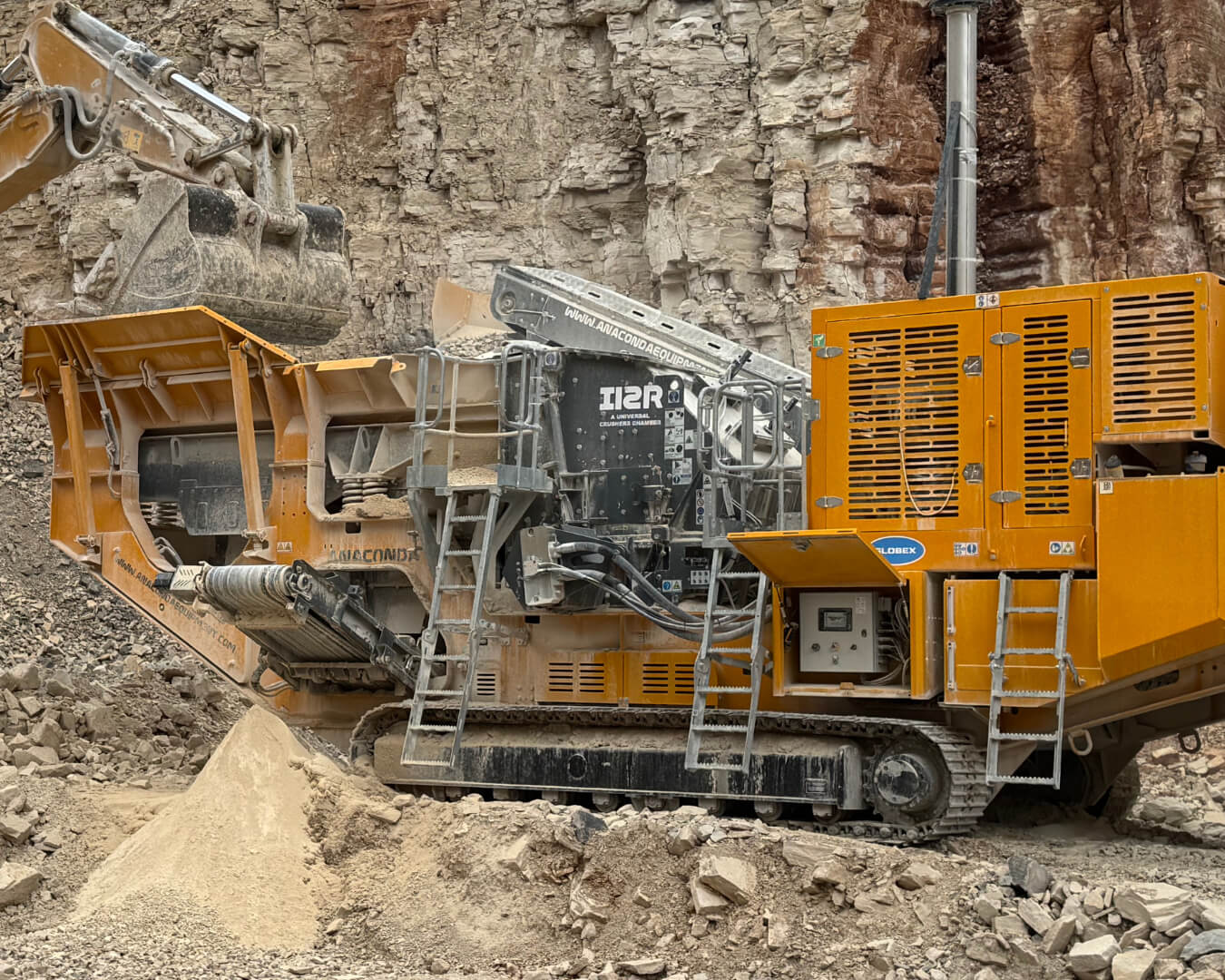
The I12 and I12R Impact Crushers are versatile tracked impact crushers engineered for high-volume crushing of virgin rock, construction and demolition, C&D, waste and recycled materials. Both models feature a 1,143 mm x 1,092 mm (45” x 43”) Universal Impact Chamber that delivers powerful throughput in a compact and highly mobile design. The I12 Impact Crusher operates as an open-circuit machine, offering fast setup and flexibility for a wide range of applications. The I12R Impact Crusher builds on this platform by adding a recirculating screen and an integrated magnet system, allowing operators to produce a consistent, cubical product in a single pass while efficiently removing metal contaminants. Together, these machines provide reliable performance for contractors and recyclers looking to maximise productivity and minimise downtime.
Anaconda I14 and I14R Impact Crushers
The I14 and I14R Impact Crushers represent the next step in size and performance within Anaconda’s impact crusher lineup and are designed for higher-capacity and more demanding applications. Featuring a larger crushing chamber and increased throughput capabilities, these models are ideal for heavy-duty quarry operations and large-scale recycling projects. The I14 Impact Crusher delivers powerful, open-circuit crushing for operators handling larger feed material and higher volumes, while the I14R Impact Crusher incorporates a fully integrated recirculating system with onboard screening for precise product sizing. This combination allows for greater efficiency, reduced reliance on additional equipment and consistent, high-quality output. Both models maintain Anaconda’s focus on durability, mobility and ease of maintenance, making them a strong choice for producers requiring performance at scale.
Final Thoughts
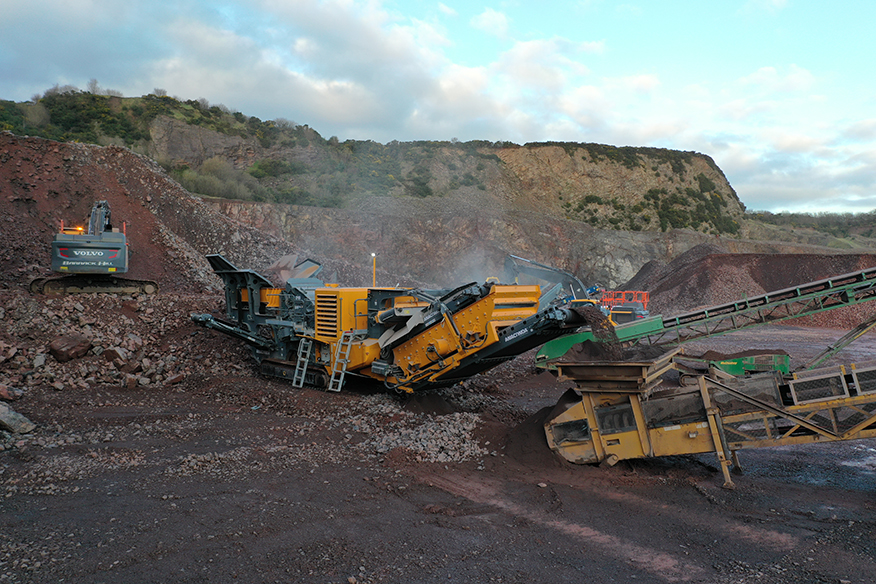
Impact crushers are a vital piece of equipment for modern material processing. Their ability to deliver high reduction ratios, consistent product shape and operational efficiency makes them an essential solution across a wide variety of industries.