The organics processing sector continues to see strong growth as municipalities, compost producers and recycling operations look for efficient ways to manage increasing volumes of material. However, processing moisture-laden organics can present unique challenges. Material often arrives compacted, clumped or difficult to screen efficiently, reducing productivity and impacting downstream equipment performance.
The mulcher, an add on to Anaconda Feeding Conveyors, can help address these challenges by conditioning material before screening, improving flowability and increasing overall plant efficiency. When paired with a trommel screen, a mulcher can help operators produce more consistent material while maximising throughput.
How The Mulcher Can Improve Organics Processing Efficiency
As demand for compost, soil products and organic recycling services continues to grow, operators are looking for ways to process material faster and more efficiently. One common challenge in organics processing is dealing with wet, sticky or compacted material that can reduce screening performance and slow production.
The mulcher provides a simple and cost-effective solution by breaking up clumps before material reaches the screening stage.
What Is a Mulcher?
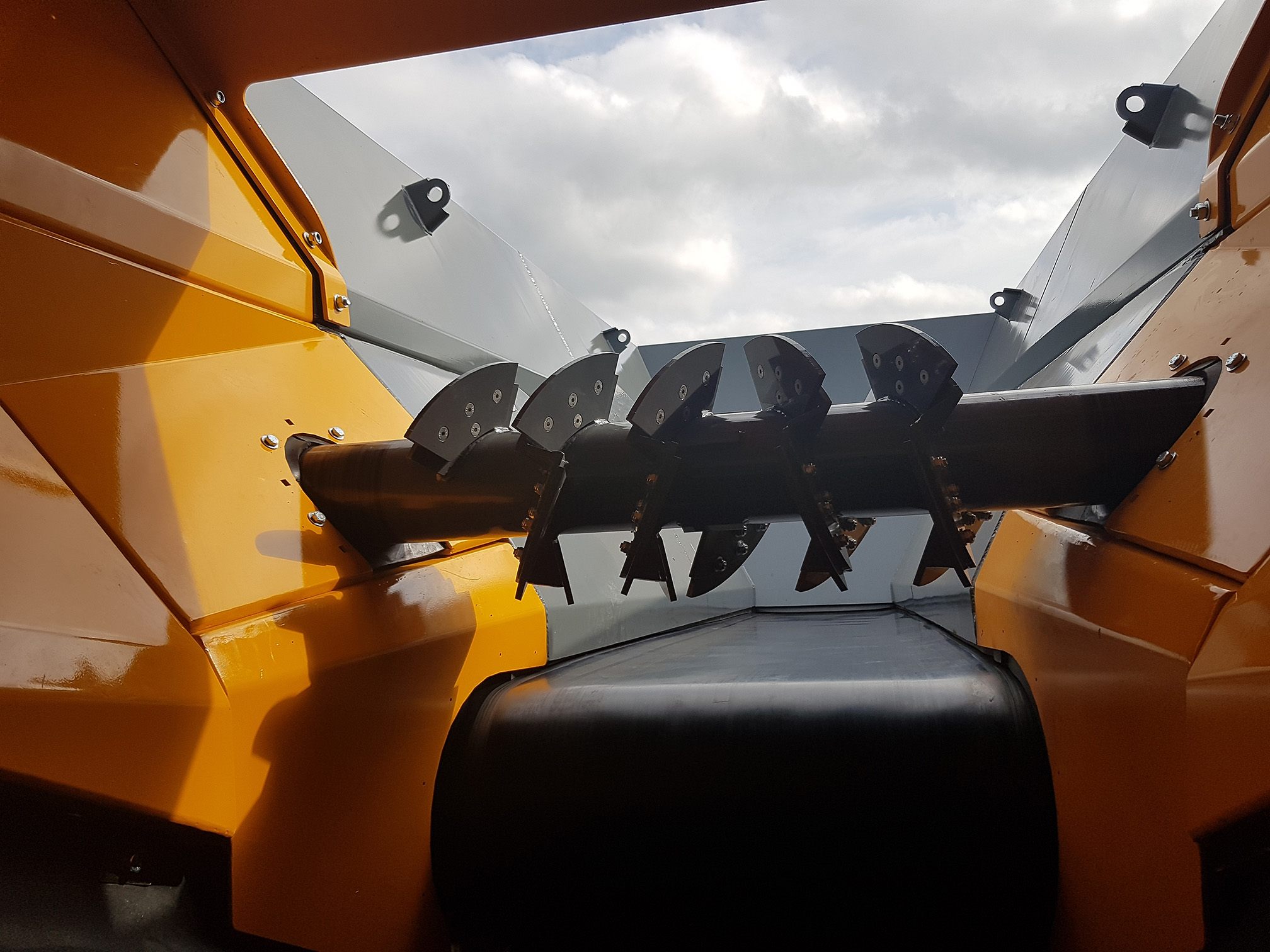
Unlike a shredder, which is designed to aggressively reduce material size, the mulcher uses a slow-speed auger to gently condition material. Its primary purpose is to break apart clumpy clay and moisture-laden organics, creating a more consistent feed for downstream processing equipment.
Because of its design, the mulcher is not intended for aggregates or green waste applications. Instead, it serves as a material-conditioning tool, helping operators prepare difficult organic materials for more effective screening.
Often described as a “cost-effective windrow turner,” the mulcher includes:
- Mulching drive
- Flared hopper extensions
- Auger
- Guarding
By loosening and aerating material prior to screening, The Mulcher helps create more favourable conditions for processing.
Why Material Conditioning Matters
When wet organics enter a trommel screen in large clumps, the screen’s ability to separate material efficiently can be compromised. Large masses may roll through the drum without fully exposing fines to the screening media, reducing screening effectiveness and limiting throughput.
Conditioning the material before screening delivers several benefits:
- Improved material flow
- Better screen efficiency
- Increased fines recovery
- Reduced material buildup
- More consistent product quality
Breaking apart compacted material allows a greater percentage of the feed to interact with the screening surface, helping operators get more value from their screening equipment.
Pairing the Mulcher with a Trommel
The mulcher is particularly effective when used in conjunction with a trommel screen. It prepares the material by reducing clumping, while the trommel performs the sizing and separation.
This combination can help operators:
- Increase screening performance
- Improve final product consistency
- Process difficult organics more effectively
- Minimise bottlenecks caused by wet or compacted feedstock
As the organics sector continues to expand, offering the mulcher alongside a trommel provides customers with a complete material conditioning and screening solution.
Installation Considerations
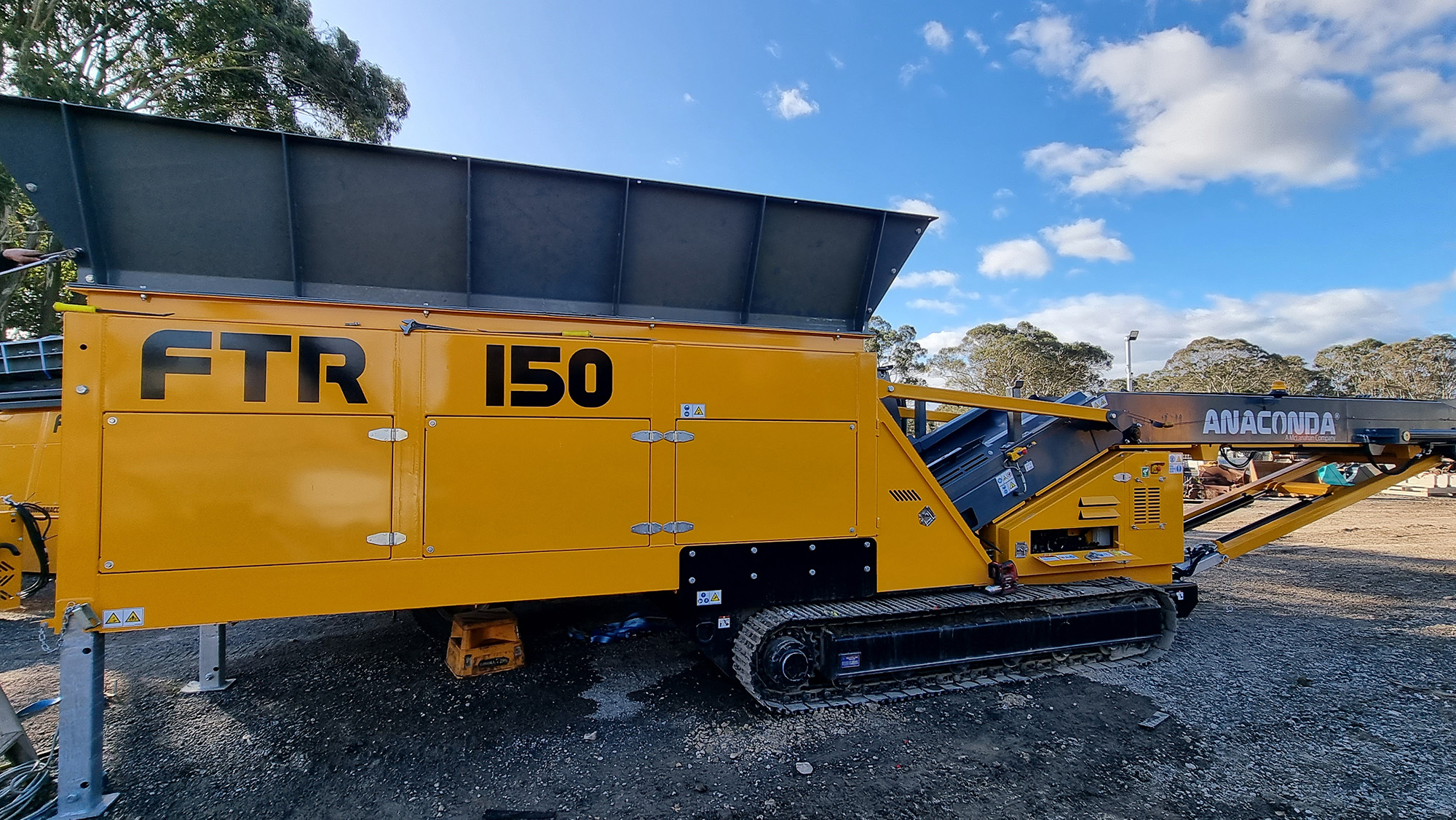
Anaconda’s mulcher is available on the FTR range of feeding conveyors, including:
- FTR100
- FTR150 (most popular configuration)
- FTR200
The unit is installed horizontally across the belt within the feed hopper, allowing material to be conditioned before entering downstream equipment.
For optimal performance, material should be fed from the rear using an excavator. This feeding method allows material time to settle, helping the auger effectively break apart clumps before discharge.
Because the mulcher is integrated into the conveyor design, it should typically be specified at the time of manufacture. Retrofitting an existing machine can be difficult and is generally not recommended.
Key Advantages
One of the biggest advantages of Anaconda’s mulcher solution is its ability to be fitted to the FTR100 or FTR150 while still allowing the machine to be transported in a standard shipping container. This provides significant logistical and cost benefits for customers operating in global markets.
Additional advantages include:
- Competitive pricing
- Improved organics screening performance
- Simple material conditioning process
For operators seeking an affordable method of improving organics processing efficiency, the ability to integrate conditioning and conveying functions into a compact solution can provide significant value.
Simple Adjustments for Different Materials
Organic materials can vary significantly in moisture content, density and composition. To accommodate changing feed conditions, operators can make straightforward adjustments to optimise performance.
Key adjustment features include:
Variable Speed Control
Adjusting the auger speed allows operators to match conditioning intensity to the incoming material. This flexibility helps maintain efficient processing across a range of applications.
Auto Reverse Function
The auto reverse feature helps manage challenging feed material and reduce the potential for blockages. By automatically reversing direction when needed, the system can maintain material flow and minimise interruptions.
Straightforward Maintenance
Routine maintenance is simple and focused primarily on wear components and lubrication.
Bolt-On Hardox Paddles
The mulcher utilises bolt-on paddles manufactured from Hardox wear-resistant steel. Over time, these paddles will experience wear and may require replacement depending on the material being processed.
The bolt-on design makes replacement straightforward, helping reduce maintenance time and keeping downtime to a minimum.
Lubrication
Regular lubrication remains an important part of preventative maintenance and helps ensure long-term reliability and consistent performance.
Getting More from Your Organics Operation
As organics processing volumes continue to increase, operators need practical solutions that improve efficiency without adding significant complexity to their operation.
The mulcher offers a proven way to condition wet, clumped organic material before screening, allowing trommels and other downstream equipment to operate more effectively. With simple maintenance requirements, adjustable operating parameters and seamless integration with Anaconda’s FTR conveyor range, the mulcher can help processors maximise throughput, improve product quality and get more value from their screening operation.