Choosing the right screening equipment can make or break a material processing operation. Trommel screens and vibrating screens both play critical roles in material separation, but they function in very different ways. Understanding when and why to use one over the other is essential for operations in recycling, aggregates, organics or construction.
What is a Trommel Screen?
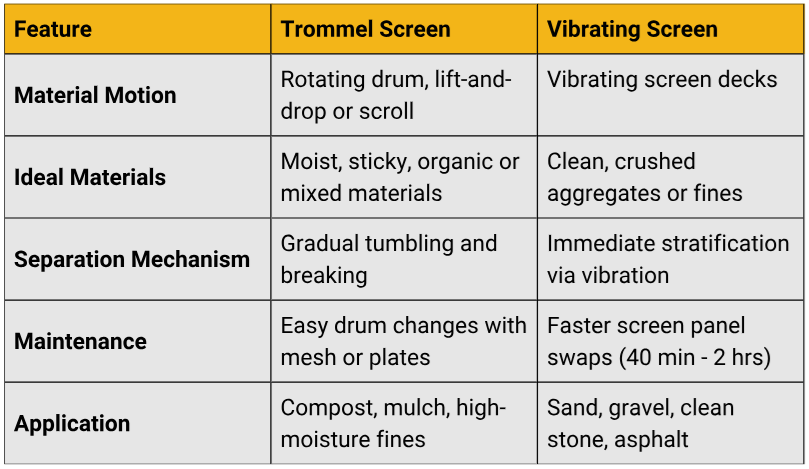
A trommel screen uses a rotating drum to separate material by size. As material enters the drum, internal lifter bars lift and drop it, helping to break down clumps and promote effective screening. Trommels are especially useful for sticky, moist or organic materials like compost, topsoil, mulch or clay-heavy aggregates.
There are two main types of trommel designs:
- Lift bar trommels, which lift and drop material for better agitation and breakdown
- Scroll, or Rifled, drums, which slowly move material through the drum via a corkscrew pattern, ideal for lighter recyclables like plastics and paper
What is a Vibrating Screen?
Vibrating screens use oscillating screen boxes to stratify and separate material across one or more decks. These screens fall into two main categories:
- Scalping Screens
- Heavy-duty screens are used to remove fines from bulky or mixed feed materials like shot rock, overburden or asphalt millings
- Typically, the first screen in a process
- Robust, simple and ideal for high-impact loads
- Finishing Screens
- Precision screens used to separate clean, already processed material (like sand, gravel or crushed stone) into fine product sizes
- Steeper deck angles allow for faster, more accurate screening
- Typically used after crushing or scalping in closed-circuit systems
When Should You Use a Trommel Screen?
Use a trommel when you’re dealing with:
- High-moisture content or sticky materials like topsoil, compost or recycled fines
- Organic or waste materials that benefit from lift-and-break action
- Lower production rate applications where versatility and portability matter more than tonnage
Trommels are especially helpful in extending seasonal productivity for materials like dolomite or wet topsoil by allowing screening during wetter months.
When Should You Use a Vibrating Screen?
Choose a vibrating screen for:
- Processing dry or crushed aggregates such as sand, gravel or stone
- Precision sizing is required for multiple clean products
- You need higher throughput capacity
Scalping screens are best for bulky or mixed material upfront, while finishing screens are ideal for clean, finer screening toward the end of the circuit.
Operational Tips for Different Types of Screens
For Trommels:
- Maintain drum speed (28–29 RPM for lift bar setup) to optimise lift-and-drop
- Use self-cleaning brushes to prevent blinding
- Avoid overloading the hopper-use built-in pressure blow-off valves and auto-reverse features if material backs up
For Vibrating Screens:
- Start at the steepest angle to ensure proper stratification
- Choke feed for maximum efficiency
- Match screen media to product size and moisture level
A Closer Look: Anaconda’s Trommel and Vibrating Screens
Trommels:
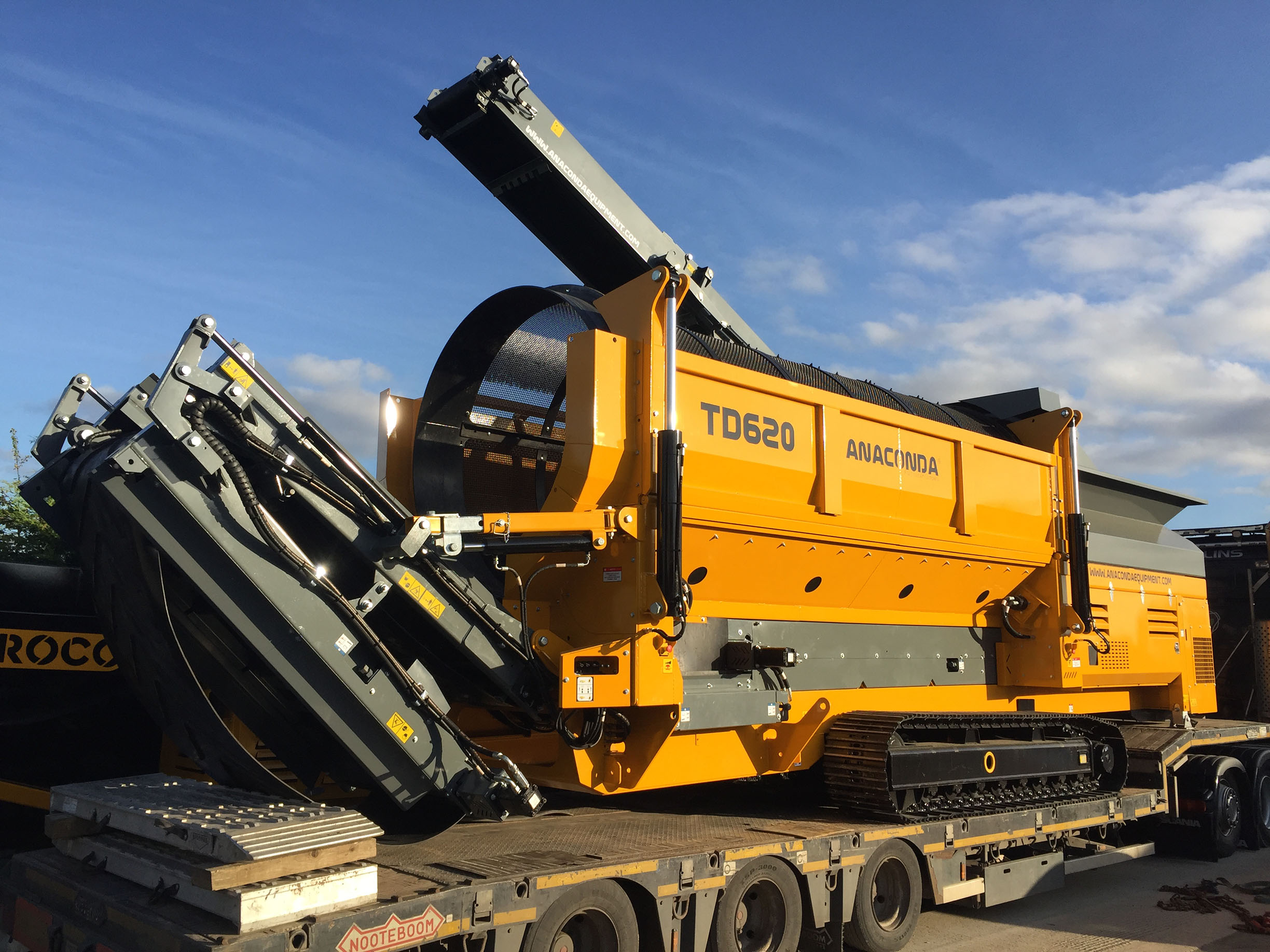
Anaconda’s TD516R and TD620 trommel screens are designed with contractor flexibility in mind. Both offer hydraulic angle adjustments, bolt-on mesh or punch plates and L-shaped designs for simplified loader visibility. The TD620 delivers up to 200 TPH, while the TD516R suits more compact or budget-conscious operations.
Anaconda’s trommels operate with free-spinning drums powered by hydraulic motors sitting on four neoprene wheels, allowing for easy drum changeouts and excellent portability.
Vibrating Screens:
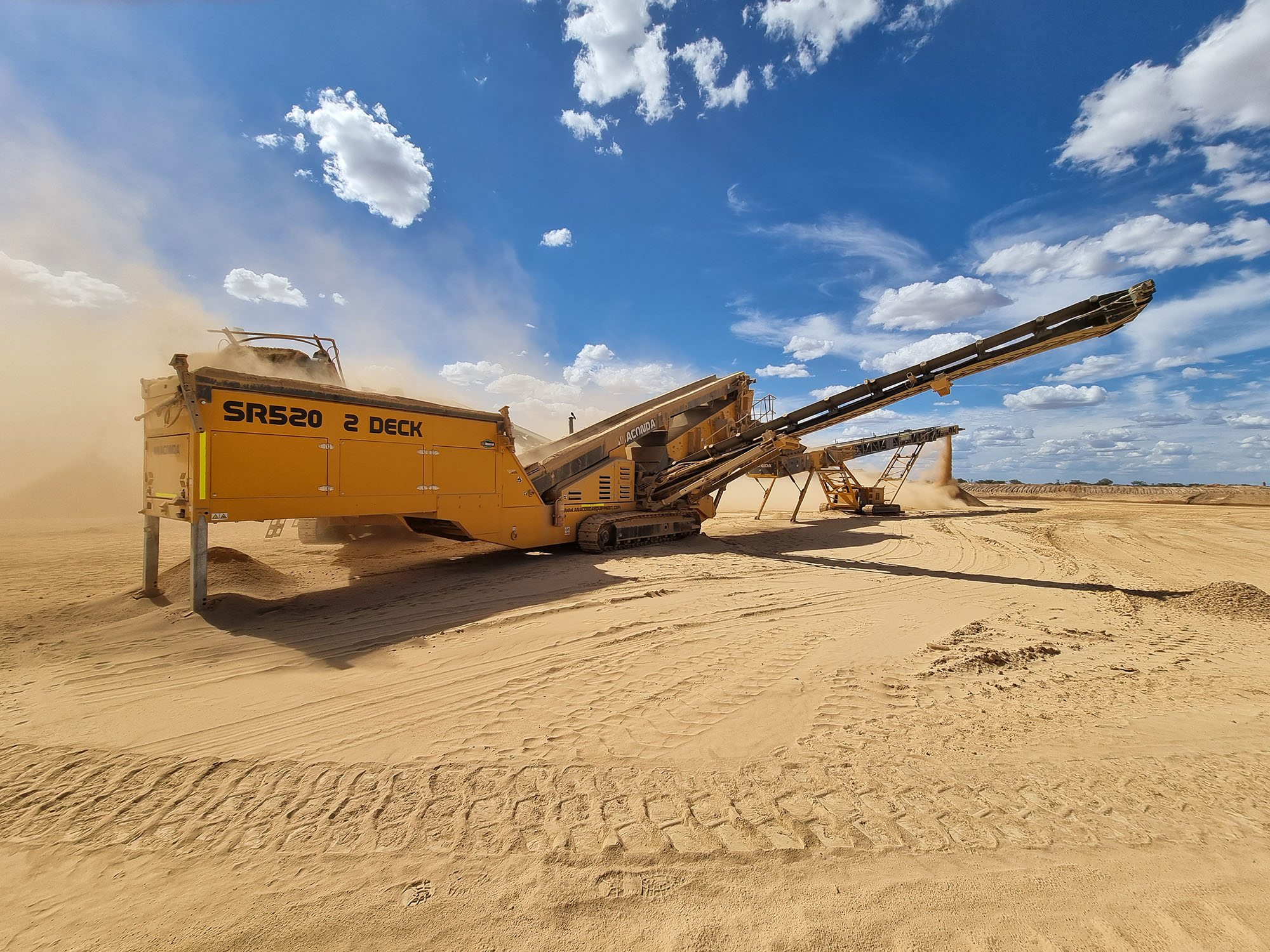
The Anaconda SR range (including the SR520, SR514, and SR410) features incline vibrating screens in two- or three-deck options. With steep angles, rinse kits and reversible transfer conveyors, these machines are ideal for producing clean splits of sand, gravel or crushed rock, whether dry or rinsed.
Anaconda also offers heavy-duty scalping screens such as the DF518 and FSL100 for applications where bulky feed needs to be screened before processing. These robust screens are well-suited for tough materials like overburden, millings or shot rock.